

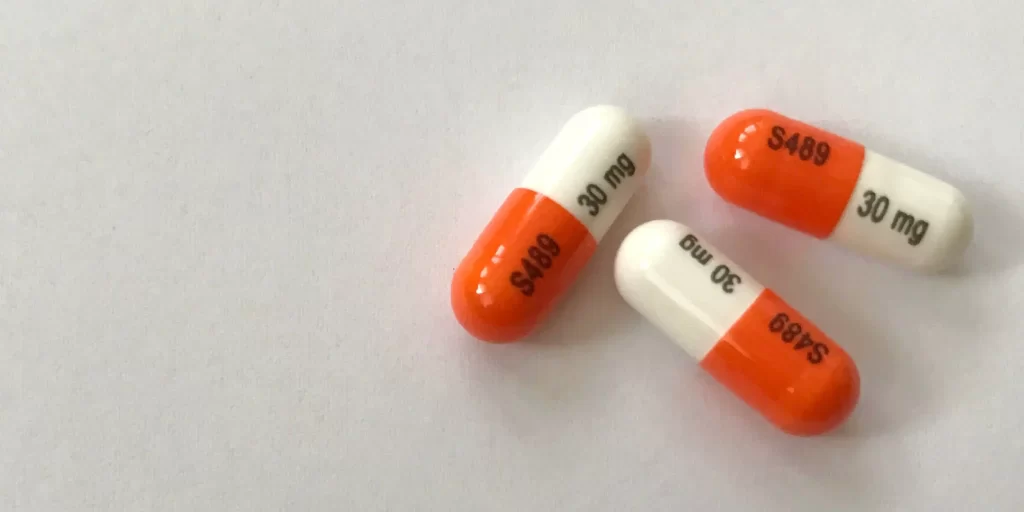
The most common estimate for Vyvanse to be detectable after use is 1–4 days in urine. Blood and saliva testing usually have shorter windows, while hair can show exposure for up to 90 days.
The key distinction is active clearance versus test detection. In a controlled study of therapeutic stimulant doses, amphetamine was detected for a median of about 67 hours in oral fluid and 77 hours in urine after lisdexamfetamine use (Helland et al., 2025).
Vyvanse is a prescription drug used to treat attention-deficit hyperactivity disorder (ADHD) in adults and children, and binge eating disorder in adults. How long Vyvanse stays in your system depends on a variety of factors, including the dosage. The larger the dose, the longer the total amount of time it will stay in the system.
How Long Does Vyvanse Stay in Your System? Quick Answer
For most people, Vyvanse remains detectable for several days after your last dose. The most common testing concern is usually a urine screen.
The clearest estimate is 1–4 days in urine, about 1–2 days in blood and 1–3 days in saliva. Hair testing can show prior exposure for much longer.
Most active dextroamphetamine may clear from the body in about 50–60 hours, or roughly 2–2.5 days. Some tests can still find small amounts after that point.
Key Takeaways
- Most testing concerns involve a urine screen. A 2025 study found median detection of about 77 hours after one therapeutic lisdexamfetamine dose, which is a little over three days (Helland et al., 2025).
- Saliva testing can identify recent use for about 1–3 days. The same study found median oral fluid detection of about 67 hours after lisdexamfetamine use (Helland et al., 2025).
- Most active dextroamphetamine may clear in about 50–60 hours. This estimate is based on the average adult half-life of about 10–11.3 hours (DailyMed, 2026).
- Vyvanse can show up as amphetamine on a drug test because the body converts lisdexamfetamine into dextroamphetamine (DailyMed, 2026).
- A valid prescription can explain a positive result. A Medical Review Officer may verify prescription details or pharmacy records during review (SAMHSA, 2024).
- Vyvanse lasts most of the day for many patients. Clinical testing measured attention changes through 14 hours in adults with ADHD (DailyMed, 2026).
- Sample pH can change amphetamine excretion. More acidic samples can increase excretion, while more alkaline samples can increase exposure (Huang et al., 2020).
- Detox drinks, water and exercise do not reliably clear this medication faster. The body needs time to process and excrete amphetamine.
- If use feels hard to control, treatment may include therapy, mental health care and a structured recovery program (ASAM & AAAP, 2024).
Detection Times by Test Type
| Test Type | Typical Detection Window | What It Usually Shows |
| Urine | 1–4 days | Recent use over several days |
| Blood | About 1–2 days | Recent use or current exposure |
| Saliva | About 1–3 days | Recent use within the past few days |
| Hair | Up to 90 days | Longer-term exposure, not current impairment |
This table separates common test types because each method answers a different question. Blood and saliva are more useful for recent exposure. Hair testing is better for identifying a longer-term pattern.
ARUP Consult lists a 1–7 day window for amphetamine in urine and notes that excretion is pH dependent (ARUP Consult, 2025). Recent research also found that oral fluid can show amphetamine for a similar window when sensitive cutoffs are used (Helland et al., 2025).
When Vyvanse Fully Leaves Your System
The medication is converted into dextroamphetamine, which lasts longer than the original prodrug. In healthy adults, dextroamphetamine has a half-life of about 10–11.3 hours (DailyMed, 2026).
Many medications take about five half-lives to mostly clear from the body. Using that estimate, most active dextroamphetamine may clear in about 50–60 hours. That is roughly 2–2.5 days for many people.
This clearance timeline is different from a testing timeline. Some methods may still detect amphetamine after the main effects have worn off.
Does Vyvanse Show Up on a Drug Test?
Yes. This prescription stimulant can show up on a drug test because it is converted into dextroamphetamine (DailyMed, 2026).
Most standard panels screen for amphetamine or related stimulant substances. They usually check for the substance class instead of the brand name. SAMHSA’s Medical Review Officer guidance notes that amphetamine and methamphetamine are included in federal workplace drug testing (SAMHSA, 2024).
A valid prescription may still lead to a positive amphetamine result. In that situation, prescription verification and confirmatory testing can help explain the result.
Valid Prescriptions and Positive Results
A valid prescription can explain why amphetamine appeared on a test. The medication can still appear when it is taken as prescribed.
Many testing programs use a review process for prescription medications. SAMHSA guidance explains that a Medical Review Officer may verify prescription details, pharmacy records or prescriber information when reviewing a positive result (SAMHSA, 2024).
Talk with your prescriber before making any changes. Stopping suddenly can cause withdrawal symptoms or worsen ADHD symptoms.
False Positive Results
Vyvanse can cause a positive amphetamine result because it is converted into dextroamphetamine. When the test detects prescribed stimulant use, that result is expected.
A false positive happens when an initial screening test reacts with a different substance. A Mayo Clinic Proceedings review notes that amphetamine immunoassays are among the screening tools most often linked with false-positive results because of cross-reacting medications and substances (Moeller et al., 2017).
Confirmatory testing can help clarify the result. Anyone taking this medication as prescribed should follow the testing program’s process for reporting prescriptions.
Urine Testing Window
Vyvanse is commonly detectable for 1–4 days in this sample type. The exact window depends on the test cutoff, dose and frequency of use.
In a 2025 controlled study, amphetamine was detected for a median of about 77 hours after a single therapeutic dose of lisdexamfetamine. Timing varied between people, likely due in part to pH-dependent handling in the body (Helland et al., 2025).
Sample acidity can affect how quickly amphetamine leaves the body. Trying to alter sample pH before a test can be unsafe and may also be identified by the lab.
Blood Testing Window
Blood testing usually has a shorter window than other common screening methods. It is more likely to show recent use or current exposure.
The original form, lisdexamfetamine, becomes non-quantifiable in plasma by about 8 hours after administration. The active metabolite, dextroamphetamine, lasts longer and has an adult half-life of about 10–11.3 hours (DailyMed, 2026).
Because of this, blood testing mainly reflects recent exposure. The exact window depends on the lab method and the compound being measured.
Saliva Testing Window
Oral fluid testing may detect amphetamine for about 1–3 days. It is often used when recent use is the main concern.
In a 2025 study, amphetamine was detected in oral fluid for a median of about 67 hours after lisdexamfetamine. The study used a sensitive 1.5 ng/mL cutoff (Helland et al., 2025).
Older or less sensitive saliva tests may have shorter windows. The exact result depends on the lab method, cutoff level and timing.
Hair Testing Window
Hair testing can show amphetamine exposure for weeks to months. A standard 1.5-inch scalp hair sample can provide information about 90 days of past substance exposure (Labcorp, 2026).
Hair testing is usually better for identifying longer-term patterns. It is less useful for recent use or current impairment.
Very recent use may take time to appear in hair because hair grows slowly. Blood or saliva testing is more useful when recent use is the main question.
Effects vs. Detection Time
How long Vyvanse lasts is different from how long it can be detected. The effects may wear off before the stimulant is fully processed by the body.
In adults with ADHD, clinical testing measured improved attention at 2 hours and up to 14 hours after dosing. In children ages 6–12, changes were measured from about 1.5 hours after dosing through 13 hours after the morning dose (DailyMed, 2026).
A person may no longer feel the effects but still test positive for amphetamine. This is one reason testing windows are usually longer than the noticeable effects.
How Long Vyvanse Effects Last
Vyvanse is designed to last most of the day. It is taken once daily in the morning because it can interfere with sleep when taken later (DailyMed, 2026).
The duration can vary based on dose, response and individual metabolism. Some people may feel changes fade after a few hours, while others may notice them into the evening.
Take Vyvanse only as prescribed. Taking it outside the prescribed directions can increase side effects, dependence risk and overdose risk (DailyMed, 2026).
Vyvanse Half-Life
A half-life is the time it takes the body to remove half of a substance from the bloodstream.
This medication has two important timelines. Lisdexamfetamine itself has a short half-life, usually less than 1 hour. The active metabolite, dextroamphetamine, has a longer half-life of about 10–11.3 hours in healthy adults (DailyMed, 2026).
This helps explain why the stimulant can continue working after the original prodrug has been converted. It also explains why tests may remain positive after the noticeable effects fade.
How the Body Processes Vyvanse
Vyvanse starts as lisdexamfetamine, an inactive prodrug. It becomes active after the body converts it into dextroamphetamine.
The conversion happens mainly in the blood through red blood cell activity. DailyMed notes that lisdexamfetamine is converted to dextroamphetamine and l-lysine primarily in blood. It also notes that red blood cells have a high capacity for this metabolism (DailyMed, 2026).
The body removes much of the medication-related material through renal excretion. After a 70 mg radiolabeled dose, about 96% of oral dose radioactivity was recovered over 120 hours (DailyMed, 2026).
Doses and Detection Time
Available doses range from 10 mg to 70 mg (DailyMed, 2026). A higher dose can increase total amphetamine exposure.
Dose matters because more stimulant exposure can take longer to process. Frequency also matters because repeated use can keep amphetamine levels more consistent.
A person who uses the prescription daily may test positive longer than someone who took one dose. The exact window still depends on the test type and cutoff level.
What Makes Vyvanse Stay Detectable Longer?
Several factors can change how long Vyvanse stays detectable.
Dose: Higher doses can lead to more amphetamine exposure.
Frequency: Repeated use can extend the testing window.
Sample pH: More acidic samples can increase amphetamine excretion. More alkaline samples can increase exposure (Huang et al., 2020).
Kidney function: Reduced kidney function can affect stimulant exposure and dosing recommendations (DailyMed, 2026).
Test cutoff: A lower cutoff can detect smaller amounts for a longer period.
Food may also affect timing slightly. The label notes that food can delay the time to peak dextroamphetamine concentration by about 1 hour, depending on the formulation (DailyMed, 2026).
Getting Vyvanse Out Faster
There is no safe or reliable way to flush this stimulant out faster. The body needs time to convert, process and excrete amphetamine.
Detox drinks, extra water and exercise do not reliably remove it before a test. Trying to manipulate test results can create health risks and may lead to an invalid result.
The safest approach is to follow the prescription directions. If testing is required, ask how to report a valid prescription.
Taking Vyvanse While Breastfeeding
If you are pregnant, breastfeeding or planning to breastfeed, ask your prescriber for individualized guidance.
DailyMed notes that amphetamine is present in human milk based on limited case reports. It also states that there are no reports of adverse effects in breastfed infants. Long-term neurodevelopmental effects are unknown (DailyMed, 2026).
LactMed notes that lisdexamfetamine is a prodrug of dextroamphetamine. It states that prescribed doses may not adversely affect nursing infants. Larger doses may interfere with milk production in some cases (LactMed, 2026).
Vyvanse Withdrawal
Withdrawal can happen after prolonged use. It is more likely when the dose is stopped suddenly or reduced quickly.
The FDA label lists withdrawal symptoms after abrupt stopping or dose reduction of CNS stimulants. These may include depressed mood, fatigue and sleep changes. Increased appetite and agitation may also occur (DailyMed, 2026).
A 2022 clinical review of psychostimulant withdrawal notes that depression, anxiety and irritability are common during early withdrawal. Fatigue and sleep disruption can also occur (Li et al., 2022).
Withdrawal timing varies by person. Talk with a healthcare professional before stopping or changing a prescribed stimulant.
Side Effects, Misuse and Addiction
Vyvanse is a Schedule II controlled substance. It has a high potential for abuse and misuse, which can lead to substance use disorder and addiction (DailyMed, 2026).
Misuse includes taking Vyvanse without a prescription or taking more than prescribed. It can also include using it in a way not directed by a healthcare provider. The risk is higher with larger doses or unapproved methods (DailyMed, 2026).
Seek help if stimulant use feels hard to control, causes cravings or continues despite harm. Treatment can address stimulant misuse, amphetamine addiction and co-occurring mental health concerns.
Vyvanse Overdose Signs
An overdose can be life-threatening. Call 911 or seek emergency help if overdose is suspected.
Urgent warning signs may include:
- Severe agitation or confusion
- Chest pain or abnormal heartbeat
- Hallucinations or panic
- High fever
- Seizures or loss of consciousness
DailyMed states that CNS stimulant overdose can affect the heart, body temperature and brain function. Severe overdose may involve seizures, coma or life-threatening hyperthermia (DailyMed, 2026).
Vyvanse Addiction Treatment in Washington
Vyvanse addiction treatment may include medical care, therapy and relapse prevention. The right level of treatment depends on symptoms and health risks.
The ASAM/AAAP stimulant use disorder guideline identifies contingency management as the current standard of care for stimulant use disorder treatment (ASAM & AAAP, 2024). A treatment plan may also include individual therapy, group therapy and mental health care.
The Recovery Village Ridgefield provides evidence-based addiction treatment for adults in Washington and the Pacific Northwest. Care may include medical detox, inpatient rehab and continuing recovery support.
For some people, rehab offers a structured setting for withdrawal support and early recovery. Treatment can also help with mental health symptoms, relapse triggers and co-occurring substance use disorders.
If Vyvanse use is affecting your health or relationships, help is available. A confidential conversation with a Recovery Advocate can help you understand treatment options and choose the right level of care.
Frequently Asked Questions
Typical Testing Window
Vyvanse is usually detectable for several days after use. Common estimates are 1–4 days in a standard urine screen, about 1–2 days in blood, 1–3 days in saliva and up to 90 days in hair.
Most Common Test Timing
A standard urine test is the most common concern for many readers. A 2025 study found median detection of about 77 hours after single therapeutic lisdexamfetamine use (Helland et al., 2025).
Amphetamine Results
Yes. Vyvanse is converted into dextroamphetamine, so it can show up as amphetamine on a drug test (DailyMed, 2026).
Full Clearance Timeline
Most of the active dextroamphetamine may clear after about 50–60 hours, or roughly 2–2.5 days. Some tests may still detect amphetamine longer, especially urine or hair tests.
Effects Duration
Vyvanse is designed to last most of the day. Some clinical testing measured attention through 14 hours after dosing, but the duration varies by person (DailyMed, 2026).
Prescription-Positive Review
Yes. A valid prescription can still produce a positive amphetamine result. Prescription verification can help explain the result during the testing review process (SAMHSA, 2024).
Flushing Before a Test
No safe or reliable method can flush Vyvanse out before a drug test. The body needs time to process and remove amphetamine.
Factors That Change Timing
Dose, frequency of use and sample pH can affect the timeline. Kidney function and test cutoff may also matter.
When to Seek Help
Consider seeking help if use feels hard to control, continues despite harm or involves taking more than prescribed. Treatment can support addiction recovery through therapy, medical care and rehab planning.
References
American Society of Addiction Medicine & American Academy of Addiction Psychiatry. (2024). The ASAM/AAAP clinical practice guideline on the management of stimulant use disorder.
Full hyperlink: https://pmc.ncbi.nlm.nih.gov/articles/PMC11105801/
ARUP Consult. (2025). Drug half-lives and urine detection windows.
Full hyperlink: https://arupconsult.com/content/drug-half-lives-and-urine-detection-windows
ARUP Consult. (2026). Drug testing.
Full hyperlink: https://arupconsult.com/content/drug-testing
DailyMed. (2026). Vyvanse: Prescribing information.
Full hyperlink: https://dailymed.nlm.nih.gov/dailymed/drugInfo.cfm?setid=704e4378-ca83-445c-8b45-3cfa51c1ecad
Helland, A., Muller, S., Spigset, O., Krabseth, H.-M., Hansen, M., & Skråstad, R. B. (2025). Drug detection in oral fluid and urine after single therapeutic doses of dexamphetamine, lisdexamfetamine, and methylphenidate in healthy volunteers. Journal of Analytical Toxicology, 49(2), 65–72. https://doi.org/10.1093/jat/bkae097
Full hyperlink: https://pmc.ncbi.nlm.nih.gov/articles/PMC12217515/
Huang, W., Czuba, L. C., & Isoherranen, N. (2020). Mechanistic PBPK modeling of urine pH effect on renal and systemic disposition of methamphetamine and amphetamine. Journal of Pharmacology and Experimental Therapeutics, 373(3), 488–501. https://doi.org/10.1124/jpet.120.264994
Full hyperlink: https://pmc.ncbi.nlm.nih.gov/articles/PMC7250368/
Labcorp. (2026). Hair drug testing.
Full hyperlink: https://www.labcorp.com/organizations/capabilities/employee-testing-wellness/pre-employment-drug-testing/hair-drug-testing
LactMed. (2026). Lisdexamfetamine. Drugs and Lactation Database.
Full hyperlink: https://www.ncbi.nlm.nih.gov/books/NBK501741/
Li, M. J., Franklin, T. R., & Pizzagalli, D. A. (2022). Clinical management of psychostimulant withdrawal: Review of the evidence. Addiction Science & Clinical Practice, 17, 69.
Full hyperlink: https://pmc.ncbi.nlm.nih.gov/articles/PMC10069411/
Moeller, K. E., Kissack, J. C., Atayee, R. S., & Lee, K. C. (2017). Clinical interpretation of urine drug tests: What clinicians need to know about urine drug screens. Mayo Clinic Proceedings, 92(5), 774–796. https://doi.org/10.1016/j.mayocp.2016.12.007
Full hyperlink: https://www.mayoclinicproceedings.org/article/S0025-6196(16)30825-4/fulltext
Substance Abuse and Mental Health Services Administration. (2024). Medical Review Officer guidance manual for federal workplace drug testing programs.
Full hyperlink: https://www.samhsa.gov/sites/default/files/mro-guidance-manual-2024.pdf