

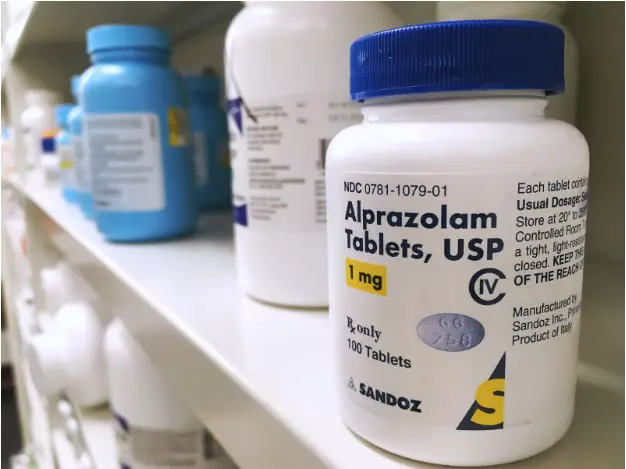
Xanax generally starts working faster than Ativan: alprazolam (Xanax) reaches peak blood levels in about 1–2 hours, while lorazepam (Ativan) peaks in about 2 hours after oral use (DailyMed alprazolam label; DailyMed lorazepam label).
Xanax is FDA-approved for generalized anxiety disorder and panic disorder. Ativan is FDA-approved for anxiety disorders and short-term relief of anxiety symptoms.
Both medications can cause sedation and physical dependence. Stopping suddenly after regular use can trigger withdrawal, and mixing either medication with alcohol, opioids or other sedatives can raise the risk of slowed breathing and overdose (FDA, 2020; Tori et al., 2020).
Key Takeaways
- Xanax peaks in about 1–2 hours; Ativan peaks in about 2 hours. That means Xanax works faster for many people (DailyMed alprazolam label; DailyMed lorazepam label).
- Xanax is FDA-approved for generalized anxiety disorder and panic disorder. Ativan is approved for anxiety disorders and short-term anxiety relief (DailyMed alprazolam label; DailyMed lorazepam label).
- Average half-lives are similar: about 11.2 hours for alprazolam and about 12 hours for lorazepam in healthy adults (DailyMed alprazolam label; DailyMed lorazepam label).
- Xanax may be more reinforcing because it reaches peak levels sooner. Both drugs can cause misuse, addiction and physical dependence (FDA, 2020; Edinoff et al., 2021).
- Ativan is considered safer than Xanax in some clinical situations, but that is not true for everyone. Age, liver function, other medications and substance use history can change the risk.
- Stopping suddenly after regular use can be dangerous. ASAM recommends a gradual taper under clinical supervision for people who have used these medications for longer than a month (ASAM, 2025; Brunner et al., 2025).
Ativan vs. Xanax: Quick Comparison
| Category | Ativan | Xanax |
| Generic name | Lorazepam | Alprazolam |
| Drug class | Benzodiazepine | Benzodiazepine |
| Controlled substance schedule | Schedule IV | Schedule IV |
| Common tablet strengths | 0.5 mg, 1 mg, 2 mg | 0.25 mg, 0.5 mg, 1 mg, 2 mg |
| Common forms | Tablet, oral solution, injectable solution | Immediate-release tablet, extended-release tablet, orally disintegrating tablet, oral solution |
| FDA-approved uses | Anxiety disorders; short-term anxiety relief | Generalized anxiety disorder; panic disorder |
| Peak blood level | About 2 hours | About 1–2 hours |
| Average half-life | About 12 hours | About 11.2 hours |
| Main metabolism pathway | Glucuronidation | CYP3A4 |
| Common side effects | Sedation, dizziness, weakness, unsteadiness | Drowsiness, impaired coordination, low blood pressure, speech problems |
| Major risks | Dependence, withdrawal, sedation | Dependence, withdrawal, sedation |
The table highlights the key differences quickly. Xanax has a quicker onset, while Ativan may feel steadier for some people. These differences matter most when the goal is managing anxiety, panic attacks or short-term symptom relief.
Ativan Similarities: How Xanax Compares
The main Ativan similarities to Xanax are their drug class, calming action and safety risks. Both medications increase the effect of gamma-aminobutyric acid, also called GABA, at GABA-A receptors. This slows central nervous system activity and can reduce anxiety (Edinoff et al., 2021).
Both medications can impair coordination after a dose. Driving, operating machinery or making safety-sensitive decisions may be risky until a person knows how the medication affects them (DailyMed alprazolam label; DailyMed lorazepam label).
Both medications can also cause physical dependence. This can happen with regular prescribed use, especially when the dose is higher or treatment continues for weeks (FDA, 2020).
Key Differences Between Ativan and Xanax
The biggest practical difference is speed. Xanax reaches peak levels sooner, which may make it more noticeable during sudden panic symptoms. Ativan peaks slightly later and may be used when a clinician wants a more gradual effect.
Their approved uses also differ. Xanax is specifically approved for panic disorder. Ativan is approved for anxiety disorders and short-term anxiety relief (DailyMed alprazolam label; DailyMed lorazepam label).
There are also formulation differences. Ativan has an injectable form used in medical settings. Xanax is mainly prescribed as an oral medication and comes in immediate-release and extended-release forms.
Which Medication Has the Faster Action?
Xanax usually has the faster action based on peak blood levels. Alprazolam reaches peak concentration in about 1–2 hours after an oral dose. Lorazepam reaches peak concentration in about 2 hours (DailyMed alprazolam label; DailyMed lorazepam label).
That speed can be useful for sudden panic symptoms. It can also make the medication more reinforcing for some people, which is one reason prescribers weigh misuse risk carefully (Edinoff et al., 2021).
Which Medication Lasts Longer?
Ativan may feel longer lasting for some people, but the average half-lives are close. Lorazepam averages about 12 hours. Alprazolam averages about 11.2 hours in healthy adults (DailyMed lorazepam label; DailyMed alprazolam label).
The felt duration can vary by dose and metabolism. Immediate-release alprazolam may wear off sooner for some people, while extended-release forms are designed to release medication over a longer period.
Which Benzo Is Stronger?
Strength depends on dose, tolerance and the desired effect. Milligram-to-milligram comparisons can be misleading because different drugs in this class do not convert cleanly.
Some conversion charts estimate that 0.5 mg alprazolam is roughly similar to 1 mg lorazepam, but this is only a clinical guide. Age, tolerance and liver function can change how someone responds (Brunner et al., 2025).
A person should not use conversion estimates to change doses on their own. Any change should be guided by a prescriber.
Anxiety: Xanax Use Cases and Safer Options
For acute anxiety, Xanax may be prescribed when fast relief is the goal. Ativan may be used when short-term relief is needed but a slightly slower peak is acceptable. Neither medication is usually the first long-term option for chronic anxiety.
Regular use can lead to tolerance and dependence. Because of that risk, many clinicians consider therapy or non-benzodiazepine medications for long-term care (FDA, 2020; Edinoff et al., 2021).
Ativan’s label also notes that effectiveness beyond 4 months has not been assessed by systematic clinical studies. Ongoing use should be reviewed regularly by a physician (DailyMed lorazepam label).
Panic Disorder Treatment
Xanax has the clearer FDA-approved role for panic disorder. Its label lists treatment of panic disorder with or without agoraphobia in adults (DailyMed alprazolam label).
Ativan may sometimes be used off-label for panic symptoms. Off-label use means a clinician prescribes a medication based on clinical judgment, even when that use is not listed on the FDA label.
For panic disorder, speed is only one part of the decision. A clinician also considers how often symptoms return and whether another treatment could provide steadier control.
Sleep Concerns With Benzodiazepines
Ativan and Xanax can both cause drowsiness, but they are not ideal long-term treatments for insomnia. Regular use can lead to next-day impairment and physical dependence (FDA, 2020; Edinoff et al., 2021).
Sleep problems may come from anxiety, alcohol use or depression. Treating the cause is usually safer than relying on sedating drugs for sleep.
Alcohol should not be used with either medication to sleep. The combination can increase severe sedation and slowed breathing risk (FDA, 2020; Tori et al., 2020).
Alcohol Withdrawal and Ativan Use
Benzodiazepines are commonly used in supervised settings to treat alcohol withdrawal. They can reduce seizure risk and help prevent severe complications. ASAM lists lorazepam as one commonly used option (ASAM, 2020).
Ativan may be used when clinicians want an option less dependent on liver oxidation. Xanax is not typically a first-choice medication for alcohol withdrawal management (ASAM, 2020).
Valium is another example of a benzodiazepine used in some alcohol withdrawal protocols. The choice depends on liver health, symptom severity and the treatment setting.
Xanax Dosage Forms and Ativan Strengths
Xanax dosage forms include immediate-release tablets, extended-release tablets, orally disintegrating tablets and oral solution. Common tablet strengths include 0.25 mg, 0.5 mg, 1 mg and 2 mg (DailyMed alprazolam label).
Ativan tablets are commonly available in 0.5 mg, 1 mg and 2 mg strengths. Lorazepam may also be available as an oral solution or injectable medication (DailyMed lorazepam label).
Dose should be individualized. People should not increase, reduce or switch doses without medical guidance.
How Long Ativan and Xanax Stay in Your System
Ativan and Xanax can stay in the body longer than their noticeable effects last. A common estimate is that a medication takes about five half-lives to mostly clear, although this varies by person.
Using average half-life estimates, alprazolam may take a little over 2 days to mostly clear in many healthy adults. Lorazepam may take about 2–3 days to mostly clear (DailyMed alprazolam label; DailyMed lorazepam label).
Drug testing timelines are different from effect duration. The test type and lab cutoff both matter.
Side Effects of Benzodiazepines
Ativan and Xanax have overlapping side effects because they work in the same drug class. Common problems include drowsiness, dizziness and poor coordination.
Ativan labeling reports sedation, dizziness and unsteadiness among frequent adverse reactions in anxiety patients. Xanax labeling also warns about sedation and central nervous system impairment (DailyMed lorazepam label; DailyMed alprazolam label).
Other possible effects include confusion, slurred speech and low blood pressure. A prescriber should be contacted if side effects feel severe or unusual.
Drug Interactions and Overdose Risks
Drug interactions are especially important with substances that slow the central nervous system. Alcohol, opioids and sleep medications can increase sedation risk (FDA, 2020).
The FDA warns that misuse can result in overdose or death, especially when these drugs are combined with opioids or alcohol. A national study also found that alcohol and benzodiazepine co-involvement were common in opioid-involved overdose deaths (FDA, 2020; Tori et al., 2020).
Seek emergency help if someone becomes difficult to wake, has slowed breathing or loses consciousness.
Taking Ativan and Xanax Together
Ativan and Xanax are usually not taken together because they work in the same drug class. Taking both can increase sedation, confusion and breathing risks.
Only a healthcare provider can determine whether this combination is appropriate. A person should not combine them unless the prescriber clearly instructs them to do so.
Older Adults and Benzodiazepine Risks
Older adults may be more sensitive to these medications. Ativan labeling notes that sedation and unsteadiness increased with age, and older adults may need cautious dose selection (DailyMed lorazepam label).
Xanax may also last longer in older adults. The label reports an average half-life of 16.3 hours in healthy elderly subjects compared with 11.0 hours in healthy younger adults (DailyMed alprazolam label).
Fall risk, confusion and memory problems are especially important in this age group. A 2023 clinical review discusses the tradeoff between treating anxiety or insomnia and increasing fall risk (Capiau et al., 2023).
Liver Function and Metabolism
Ativan and Xanax are processed differently. Lorazepam is mainly converted to lorazepam glucuronide and then excreted in urine. Alprazolam is primarily metabolized by CYP3A4 (DailyMed lorazepam label; DailyMed alprazolam label).
This difference can matter for people with liver disease. It can also matter for people taking medications that affect CYP3A4.
A prescriber should review liver health and current medications before choosing either option.
Pregnancy and Breastfeeding
People who are pregnant, planning pregnancy or breastfeeding should talk with a healthcare provider before taking either medication.
Ativan labeling notes that exposure during pregnancy may be associated with risks to the infant, including symptoms after birth. It also states that lorazepam has been detected in human breast milk (DailyMed lorazepam label).
A person should not stop suddenly after becoming pregnant without medical guidance. The safer plan depends on dose, duration and clinical need.
Addiction Risk With Benzodiazepines
Both medications can contribute to addiction, physical dependence and withdrawal. Xanax may be more reinforcing for some people because it peaks quickly, but Ativan still carries risk (Edinoff et al., 2021).
The FDA requires boxed warnings because this drug class can lead to misuse, addiction and physical dependence. Risk rises with higher doses, longer use and a history of substance misuse (FDA, 2020).
Klonopin is another medication in this class, and similar safety concerns can apply. The exact risk depends on the person and the prescribing plan.
Insurance Coverage and Cost
Ativan and Xanax are both available as generics. Generic versions are often covered by insurance and may cost less than brand-name products.
Exact pricing depends on pharmacy, dosage and insurance coverage. Because prices change often, a pharmacy or insurance plan is the best source for current cost information.
Cost should not be the main factor in choosing between the two. Diagnosis, safety risks and tapering needs matter more.
Choosing Between These Medications
The right choice depends on the reason for treatment and the person’s risk profile. A clinician may consider panic disorder, substance use history and fall risk.
Benzodiazepines should generally be used at the lowest effective dose for the shortest appropriate time. Continued use should be reassessed regularly (FDA, 2020; Brunner et al., 2025).
Switching Medications Safely
A doctor may consider switching medications if symptoms are not improving or side effects are difficult to tolerate. A switch may also be considered when panic symptoms require a different approach.
A person should not stop one medication suddenly to start another. Abrupt stopping can trigger serious symptoms and, in some cases, seizures (Brunner et al., 2025).
Dose conversions are not exact. Age, tolerance and treatment goals all affect how a clinician manages a switch.
Tapering After Xanax Use
A clinician may recommend a taper if symptoms return between doses or side effects become difficult to manage. A taper may also help when a person no longer needs the medication.
Stopping Xanax suddenly can be dangerous. The label warns that rapid dose reduction after continued use may cause acute reactions that can be life-threatening (DailyMed alprazolam label).
ASAM’s tapering guidance states that patients who have taken these medications for longer than a month should taper gradually under clinical supervision (ASAM, 2025; Brunner et al., 2025).
Withdrawal Risks
Withdrawal can happen with either medication, especially after regular use. Risk is higher with abrupt stopping, higher doses or long-term treatment (FDA, 2020; Brunner et al., 2025).
Possible symptoms include anxiety, insomnia and tremors. More serious reactions can include hallucinations or seizures.
Anyone who wants to stop or reduce use should speak with a healthcare provider first (ASAM, 2025).
Non-Benzodiazepine Alternatives for Anxiety
Ativan and Xanax can reduce anxiety quickly, but they are not the only options. Many people benefit from longer-term treatments that do not carry the same dependence risk.
Depending on the person, alternatives may include therapy, non-benzodiazepine medications and care for co-occurring substance use. A healthcare provider can help determine whether medication, therapy or combined treatment is safest.
Getting Help for Benzodiazepine Addiction
Addiction can involve cravings, loss of control and continued use despite harm. Physical dependence can also occur when someone takes medication as prescribed (FDA, 2020; Edinoff et al., 2021).
Treatment can help people taper safely and manage symptoms. It can also address anxiety or panic symptoms without relying only on sedating medications (ASAM, 2025).
Care may include medical detox, inpatient rehab and outpatient treatment. If use is mixed with alcohol, opioids or other drugs, medical support becomes even more important (FDA, 2020; Tori et al., 2020).
Personalized Addiction Care in Washington
The Recovery Village Ridgefield provides addiction treatment for adults in Washington and the Pacific Northwest. Care may include medical detox, inpatient rehab and outpatient treatment.
Treatment can help people address benzodiazepine misuse, co-occurring alcohol use and anxiety symptoms. A Recovery Advocate can explain options and help determine what level of care may fit the situation.
If Ativan, Xanax or another sedating medication is becoming hard to control, help is available. Contact The Recovery Village Ridgefield to learn more about treatment and recovery support.
Frequently Asked Questions
Is Ativan stronger than Xanax?
Strength depends on dose, formulation and tolerance. Xanax may feel faster for some people, but that does not make it safer or better.
Does Xanax work faster than lorazepam?
Yes. Xanax usually peaks in about 1–2 hours, while lorazepam peaks in about 2 hours after oral use (DailyMed alprazolam label; DailyMed lorazepam label).
Which lasts longer, lorazepam or alprazolam?
Lorazepam may feel longer lasting for some people, but the average half-lives are similar. Lorazepam averages about 12 hours, while alprazolam averages about 11.2 hours in healthy adults (DailyMed lorazepam label; DailyMed alprazolam label).
Is Xanax better for panic attacks?
Xanax is FDA-approved for panic disorder in adults. Lorazepam may be used off-label for panic symptoms. The best choice depends on the person’s risks and treatment plan (DailyMed alprazolam label).
Can you take both medications together?
These medications are usually not taken together because both are sedating drugs. Combining them can increase sedation and breathing risks.
Can you drink alcohol with benzodiazepines?
No. Alcohol can increase the risk of serious effects when combined with benzodiazepines, including severe sedation and slowed breathing (FDA, 2020; Tori et al., 2020).
Can you switch from Xanax to lorazepam?
A clinician may switch someone from Xanax to lorazepam, but it should be done with medical supervision. Dose conversions are not exact, and abrupt stopping can trigger symptoms (Brunner et al., 2025).
Is it safe to stop either medication suddenly?
No. Stopping suddenly after regular use can be dangerous. ASAM recommends gradual tapering under clinical supervision for people who have used these medications for longer than a month (ASAM, 2025; Brunner et al., 2025).
When should someone seek help?
Seek help if use feels hard to control, doses are increasing or withdrawal symptoms appear. Call 911 if someone has slowed breathing, severe confusion or extreme sleepiness.
References
American Society of Addiction Medicine. (2020). The ASAM clinical practice guideline on alcohol withdrawal management. Full hyperlink: https://www.asam.org/docs/default-source/quality-science/the_asam_clinical_practice_guideline_on_alcohol-1.pdf
American Society of Addiction Medicine. (2025). Benzodiazepine tapering. Full hyperlink: https://www.asam.org/quality-care/clinical-guidelines/benzodiazepine-tapering
Brunner, E., Ghosh, S. M., Clements-Cortes, A., & others. (2025). Joint clinical practice guideline on benzodiazepine tapering: Considerations when benzodiazepine risks outweigh benefits. Full hyperlink: https://pmc.ncbi.nlm.nih.gov/articles/PMC12463801/
Capiau, A., Huys, L., van Poelgeest, E., van der Velde, N., Petrovic, M., & Somers, A. (2023). Therapeutic dilemmas with benzodiazepines and Z-drugs: Insomnia and anxiety disorders versus increased fall risk: A clinical review. European Geriatric Medicine, 14(4), 697–708. Full hyperlink: https://pmc.ncbi.nlm.nih.gov/articles/PMC10447278/
DailyMed. (2011). Ativan — lorazepam tablet: Prescribing information. U.S. National Library of Medicine. Full hyperlink: https://dailymed.nlm.nih.gov/dailymed/drugInfo.cfm?setid=ba6ce50e-c5a9-47ca-9803-a1ed82172b0e
DailyMed. (2023). Xanax — alprazolam tablet: Prescribing information. U.S. National Library of Medicine. Full hyperlink: https://dailymed.nlm.nih.gov/dailymed/drugInfo.cfm?setid=388e249d-b9b6-44c3-9f8f-880eced0239f
Edinoff, A. N., Nix, C. A., Hollier, J., Sagrera, C. E., Delacroix, B. M., Abubakar, T., Cornett, E. M., Kaye, A. M., & Kaye, A. D. (2021). Benzodiazepines: Uses, dangers, and clinical considerations. Neurology International, 13(4), 594–607. Full hyperlink: https://pmc.ncbi.nlm.nih.gov/articles/PMC8629021/
Tori, M. E., Larochelle, M. R., & Naimi, T. S. (2020). Alcohol or benzodiazepine co-involvement with opioid overdose deaths in the United States, 1999–2017. JAMA Network Open, 3(4), e202361. Full hyperlink: https://pmc.ncbi.nlm.nih.gov/articles/PMC7146101/
U.S. Food and Drug Administration. (2020). FDA requiring boxed warning updated to improve safe use of benzodiazepine drug class. Full hyperlink: https://www.fda.gov/drugs/drug-safety-and-availability/fda-requiring-boxed-warning-updated-improve-safe-use-benzodiazepine-drug-class